
If you’re expecting or have a winter baby you might be stressing over… Are they warm enough? Are they too warm?
I swear having a baby unlocks a million new stress triggers you were never aware of.
Those first few nights for me bringing home each baby had me getting up every 5 minutes to make sure the baby was safe in their bassinet.
When it comes to temperature though we definitely want to make sure that baby is warm enough, but not sweating or overheating because we unintentionally dressed them too warm.
Dress your baby in one more light layer than you are wearing, using thin adjustable layers instead of one bulky coat. For cold weather, start with a bodysuit or sleeper, add a fleece or sweater layer, then use a bunting, coat, or stroller blanket outside.
Check your baby’s chest, back, or neck to make sure they are warm but not sweaty. Avoid bulky coats or snowsuits in the car seat, and skip hats during indoor sleep.
Before leaving, sign up for a FREE Baby Box of samples from Babylist!
The Easy Rule: One More Layer Than You
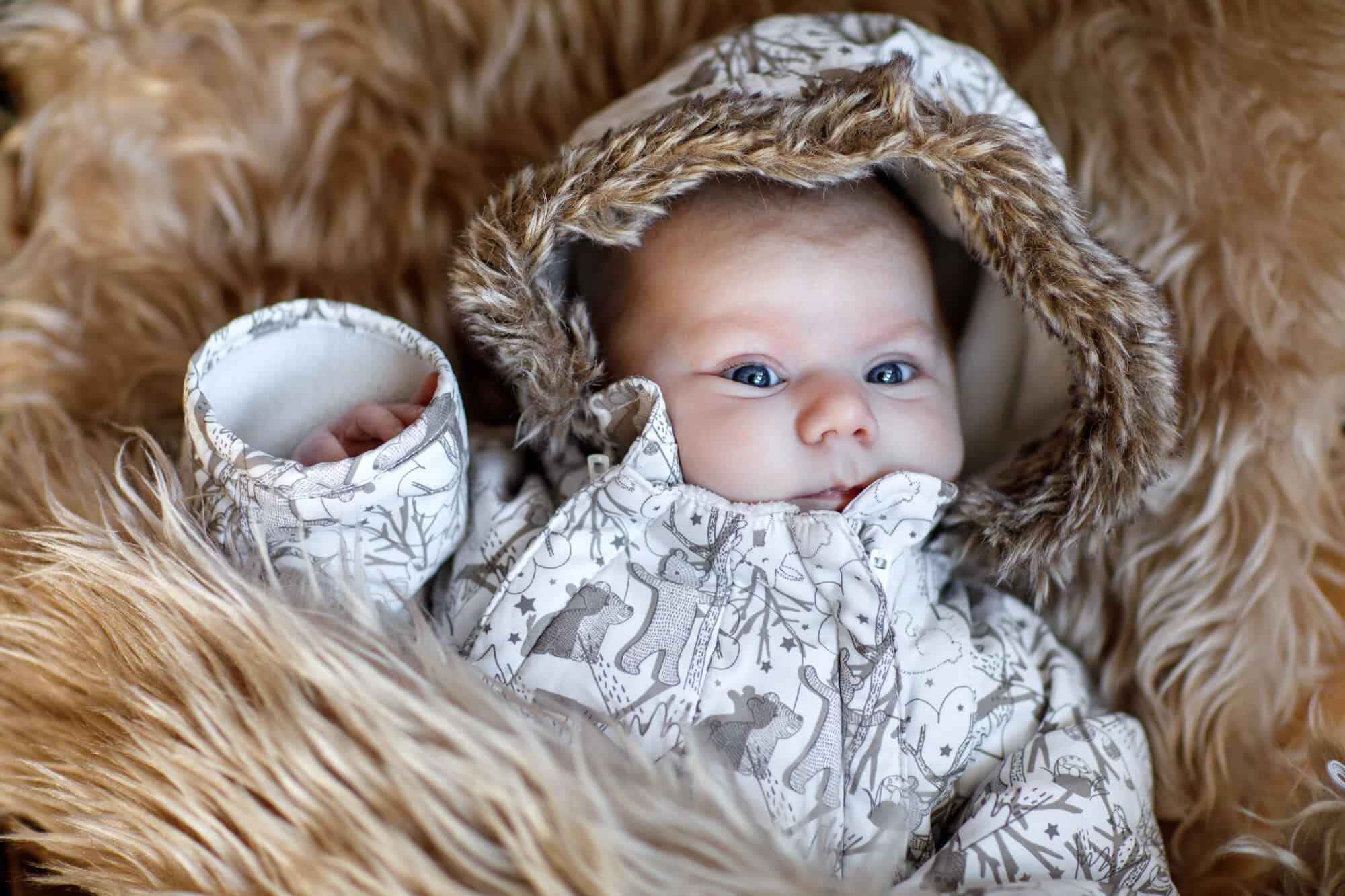
A great way to start is to dress your baby in one more light layer than you are wearing.
If you are comfortable in a long sleeve shirt and jacket, your baby might need a long sleeve bodysuit, pants, socks, and a jacket or bunting.
If you are bundled in a sweater, coat, hat, and gloves, your baby might need cozy layers too, plus a hat, mittens, and warm socks or booties.
The American Academy of Pediatrics gives the same basic guidance for infants, saying they generally need one more layer than adults, but also reminds parents to remove coats and blankets before buckling babies into car seats.
The trick is not making that extra layer giant and bulky.
Think light layers, not one huge puffy layer.
Why Layers Work Better Than One Big Coat
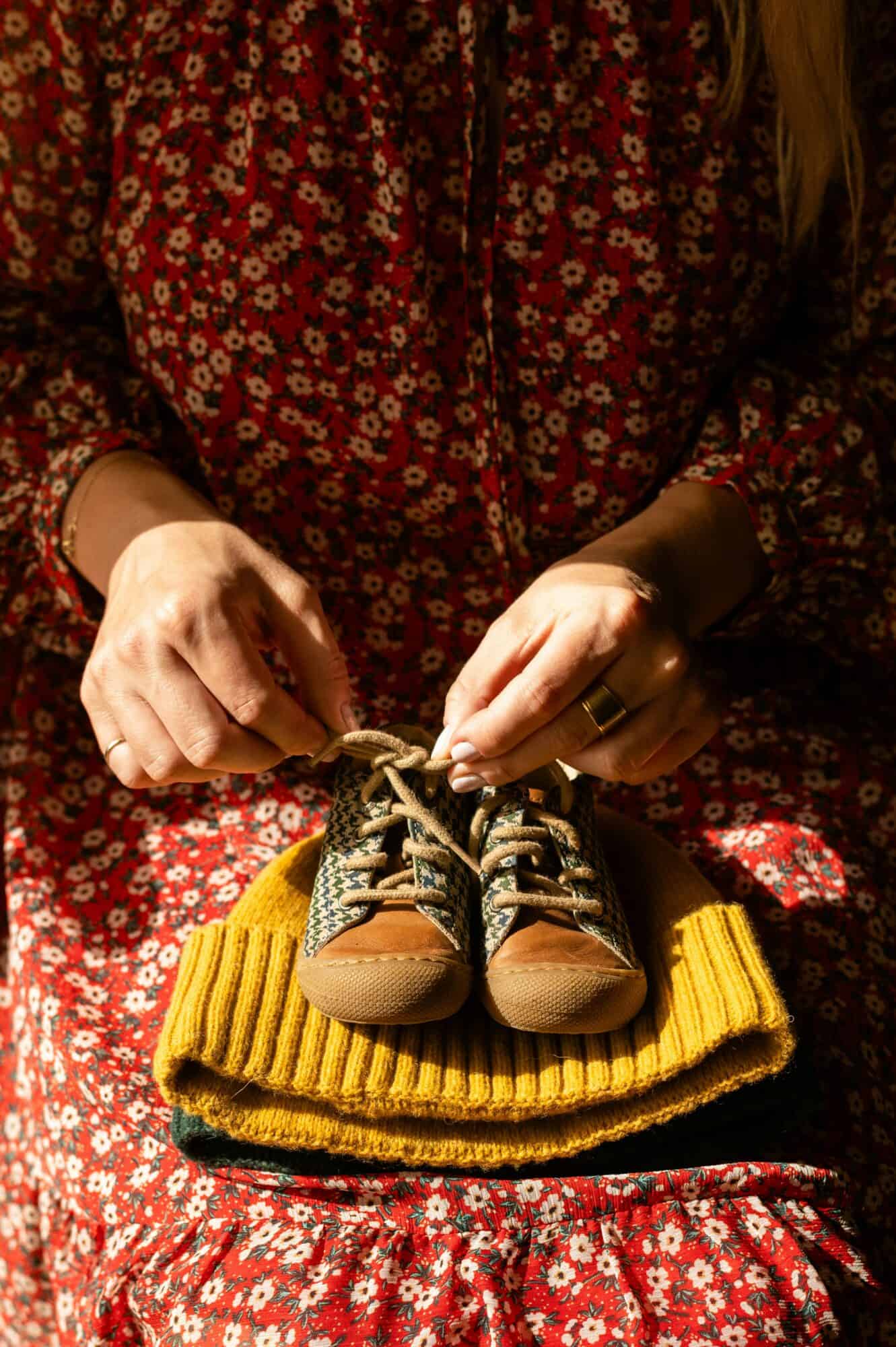
Light layers are the best tip because you can always adjust them. I’ve even heard many adults over the years talk about how it’s best to wear light layers when it’s cold.
Babies go from the cold driveway to the warm car to the freezing stroller walk to the store with heating all in one outing.
One giant snowsuit might be perfect outside, but way too warm once you are inside Target trying to pick up a few essentials for the week.
My babies all would tend to get really sweaty. So I’d make sure to always bring a light jacket or sweater, but check them often while we would run errands so I could put it on or take it off any time.
Layers help you:
- Add warmth without overheating
- Remove one piece when baby gets warm
- Keep baby dry if one layer gets damp
- Use safer thin layers in the car seat
- Adjust for wind, sun, snow, or indoor heat
One mom on Reddit explained it perfectly: “I always layer so I can take things off to adjust for temperature changes.”
That is really the best winter baby dressing strategy in one sentence.
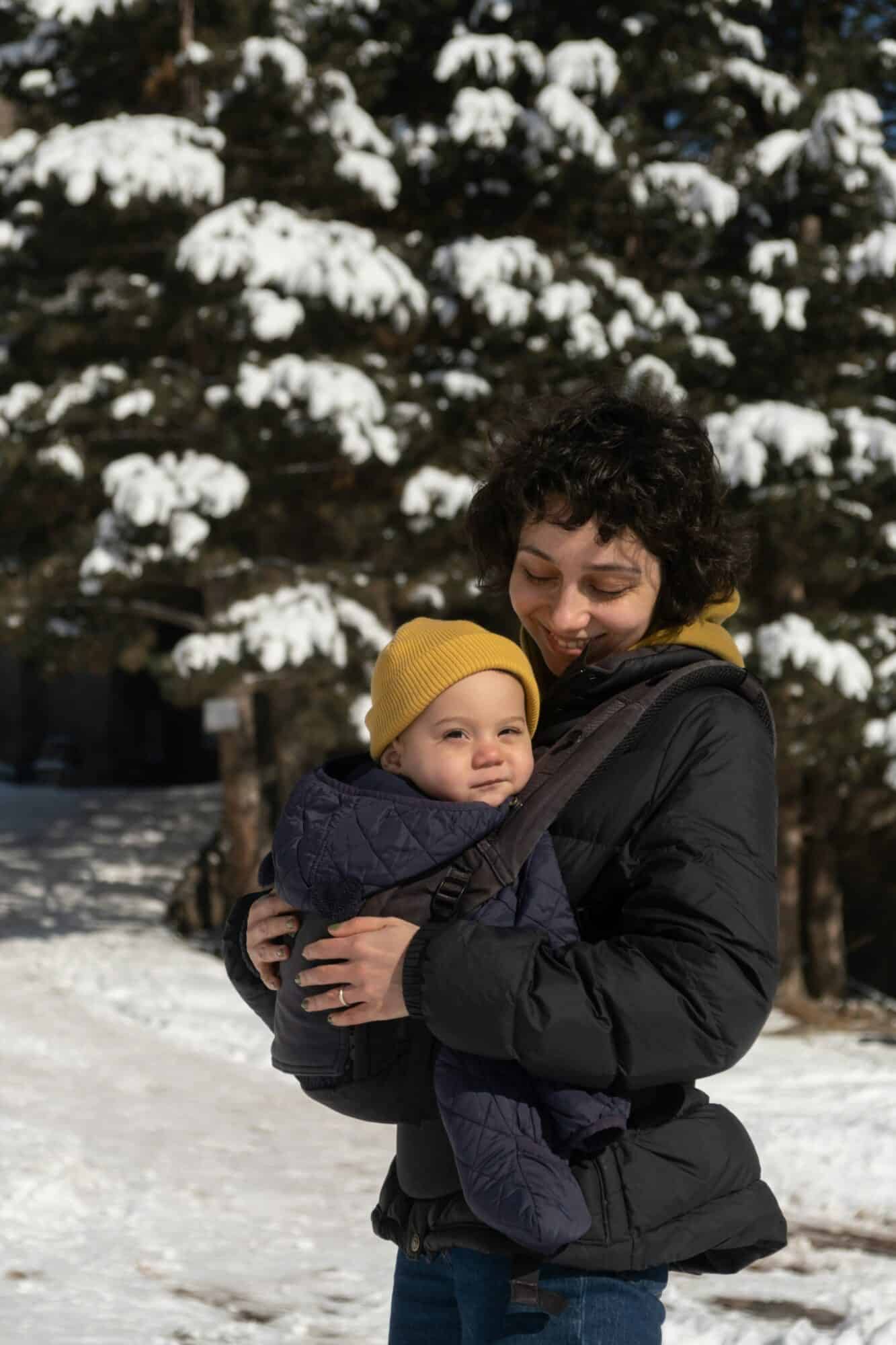
How to Check If Your Baby Is Too Hot or Too Cold
Here is the part that trips up so many new parents: baby hands and feet are not always the best way to judge temperature.
It is very normal for babies to have cooler hands and feet, especially when they are little. Instead, check their chest, tummy, upper back, or the back of their neck.
The Lullaby Trust recommends checking the chest or back of the neck because hands and feet are usually cooler. If your baby’s skin feels hot or sweaty, remove a layer.
Signs your baby may be too hot
- Sweaty neck
- Damp hair
- Hot chest or back
- Flushed cheeks
- Fussiness
- Fast breathing
- Heat rash
- Acting uncomfortable or unusually sleepy
Signs your baby may be too cold
- Cool chest, tummy, or back
- Pale or blotchy skin
- Shivering in older babies
- Fussiness
- Unusual stillness
- Blue lips, which needs urgent attention
A mom in one parenting thread shared that she checks the back of the neck instead of hands because baby hands can feel cold even when the rest of baby is comfortable. That is a good habit to get into.
Warm neck, dry skin, and a calm baby usually means you are doing just fine.
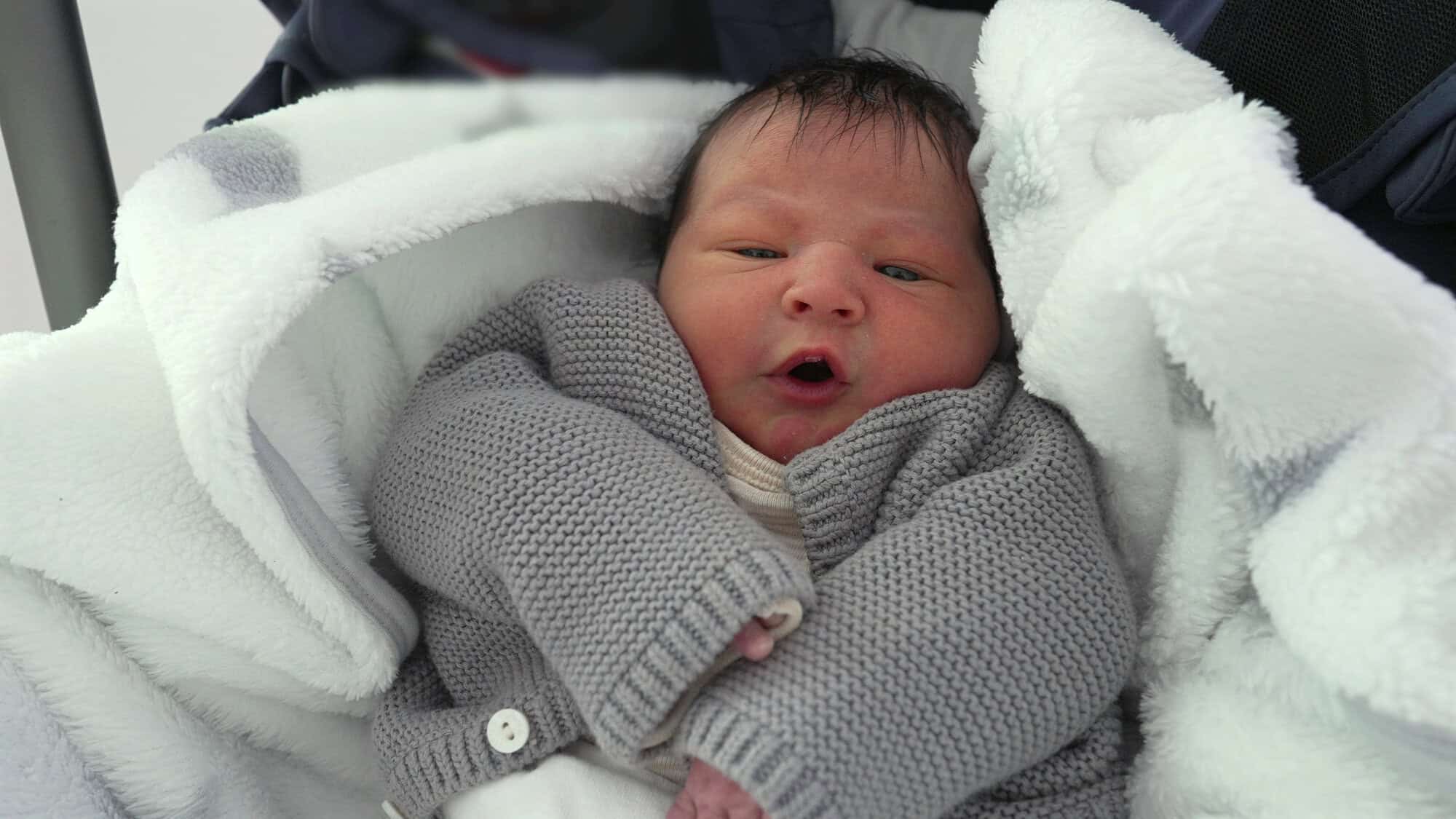
The Best Winter Layering System for Babies
Think of baby’s winter outfit in three parts:
- Base layer
- Warm middle layer
- Protective outer layer
Then add accessories like a hat, mittens, socks, and booties.
1. Base Layer: What Touches Baby’s Skin
The base layer is the first layer your baby wears.
Good options:
- Long sleeve bodysuit
- Footed pajamas
- Cotton sleeper for mild days
- Thermal or merino wool layer for very cold days
- Leggings or soft pants
- Socks if the outfit is not footed
For normal errands, daycare, or mild winter weather, a cotton onesie or sleeper is usually fine. For true cold weather, especially snow days or long stroller walks, moisture-wicking fabrics like merino wool or synthetic thermal layers can help keep baby warmer and drier.
Avoid anything scratchy or too tight. Babies need to be able to wiggle those chunky little legs.
2. Middle Layer: The Cozy Warmth
The middle layer adds insulation.
Good options:
- Fleece sleeper
- Fleece jacket
- Soft sweater
- Quilted vest
- Fleece pants
- Lined pants
- Warm romper
- Thin fleece bunting
Fleece is popular because it is warm, lightweight, easy to wash, and usually not as bulky as a puffer coat.
One Reddit mom said she used footie pajamas as the first layer, then added a warm outfit or sweatshirt over top. Another mom said her baby wore sweatpants or fleece leggings with long sleeve onesies for everyday winter wear.
That is exactly the kind of realistic winter dressing most moms actually do. Just a onesie and some warm layers put in your diaper bag is perfect.
We all know there’s gonna be a blow out or spit up, so extra clothes are a must anyways.
3. Outer Layer: Wind, Snow, and Cold Protection
The outer layer protects baby from cold air, wind, rain, or snow.
Good options:
- Baby bunting
- Fleece pram suit
- Snowsuit
- Warm jacket for mild days
- Waterproof snowsuit for snow play
- Stroller footmuff or bunting bag
For non-walking babies, a bunting or one-piece suit is usually easier than trying to keep tiny jackets, pants, socks, and booties in place.
We live in Southern California and have never had to use buntings. But, I hear they are a life saver!
For older babies who are crawling or toddling around, look for outerwear that lets them move. A stiff, giant snowsuit might be warm, but if your baby cannot bend their knees, they might not be feeling very comfortable.
Use this as a starting point, then check baby’s neck, chest, or back. If baby feels sweaty, remove a layer. If baby’s chest feels cool, add one.
Baby Winter Clothing Guide by Temperature
Use this as a starting point, not a strict rule. Wind, humidity, sun, and how long you are outside all factor into how they should be dressed.
| Temperature | What Baby Can Wear | Notes |
|---|---|---|
| 50 to 60°F | Long sleeve bodysuit, pants, socks, light sweater or jacket | Add a hat if it is windy |
| 40 to 50°F | Long sleeve bodysuit, pants, socks, fleece layer, light jacket | Good for errands and quick walks |
| 32 to 40°F | Base layer, fleece or sweater, warm pants, hat, mittens, booties, coat or bunting | Add stroller blanket if baby is sitting still |
| 20 to 32°F | Base layer, fleece middle layer, insulated bunting or snowsuit, hat, mittens, warm socks or booties | Keep checking neck and chest |
| Below 20°F | Warm base layer, fleece or wool middle layer, insulated snowsuit, hat, mittens, booties, stroller cover or blanket | Keep outings shorter and watch baby closely |
If baby’s neck is sweaty, remove a layer. If baby’s chest or back feels cool, add a layer or head inside.
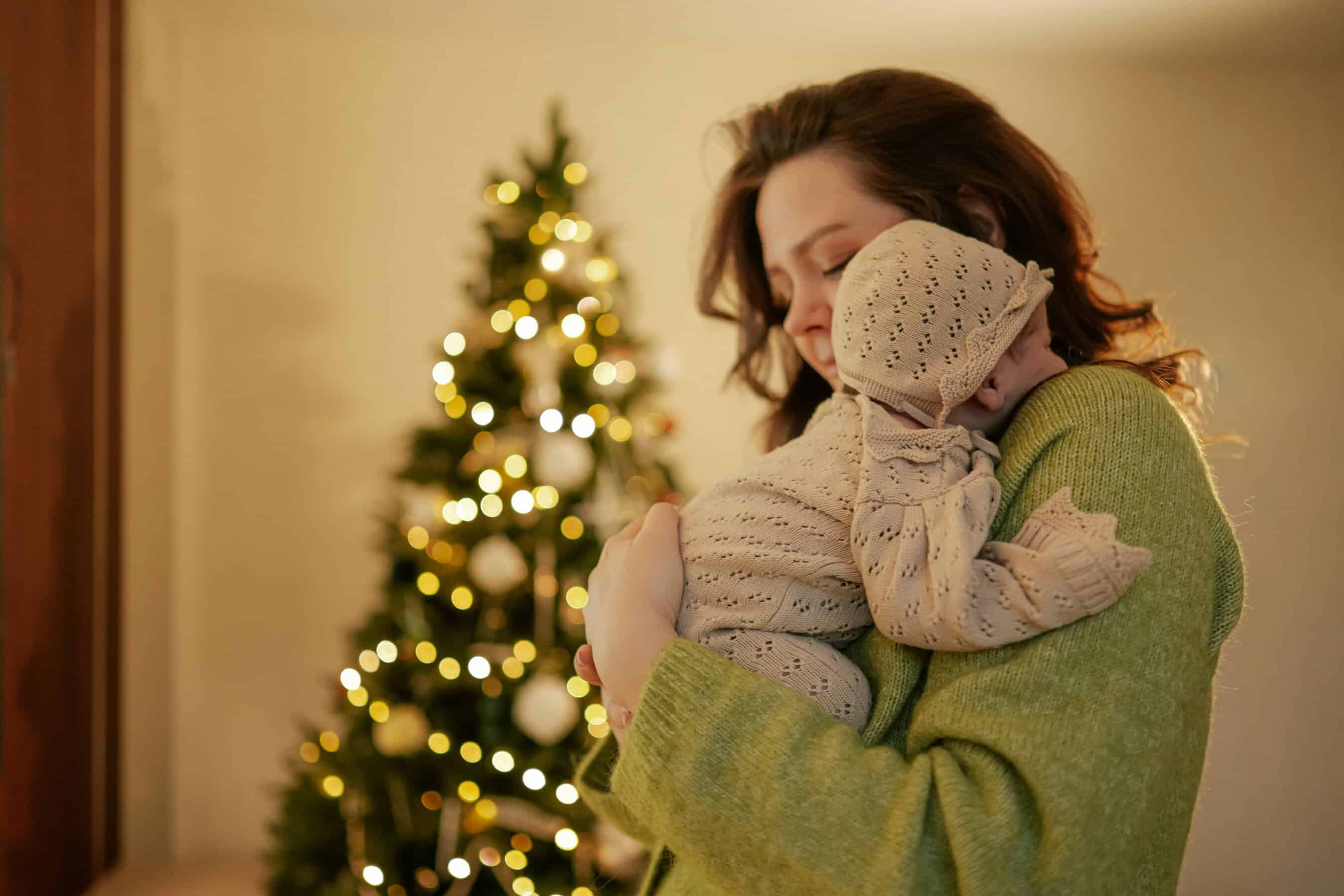
How to Dress a Newborn in Winter
Newborns need a little extra attention because they are still learning how to regulate temperature. So, you need to keep a closer eye on them.
For indoor winter days, try:
- Long sleeve onesie
- Footed sleeper
- Sleep sack for naps or bedtime
- No hat indoors for sleep
For outdoor winter walks, try:
- Long sleeve bodysuit
- Footed sleeper or pants and socks
- Fleece layer
- Hat that covers ears
- Mittens
- Bunting or stroller blanket
The NHS says a room temperature of 16 to 20°C, which is about 61 to 68°F, is comfortable and safe for sleeping babies with light bedding or a lightweight, well-fitting sleep bag. It also says if baby seems cold in a sleeping bag, add an extra clothing layer instead of extra blankets.
I know 61 to 68°F can sound chilly to a lot of us in the U.S., especially if you are used to keeping the house warmer. The main takeaway is is that babies should be comfortably warm, not hot and sweaty.
How to Dress an Older Baby in Winter
Older babies are a little easier because you probably know their personality by now.
Some babies run warm. Some seem chilly all the time. Some will rip off socks like it is their full-time job.
My boys stripped down to their undies daily once they were old enough. lol
I could not keep them dressed!🫣
For a 6 to 12 month old in winter, try:
- Long sleeve onesie or shirt
- Pants or fleece leggings
- Socks
- Sweater or fleece layer
- Hat and mittens outside
- Bunting, jacket, or snowsuit depending on the weather
One mom in a parenting thread said her main struggle was keeping baby’s feet warm because her baby pulled off socks and little shoes. So real. For non-walkers, soft booties that cinch around the ankle can work better than tiny hard shoes.
For babies starting to crawl or walk, use:
- Flexible layers
- Waterproof outerwear if they will touch snow
- Warm socks
- Soft boots or insulated shoes
- Mittens with longer cuffs

What Should Baby Wear in a Stroller in Winter?
For stroller walks, remember that your baby is not moving as much as you are.
You may feel warm because you are walking, pushing the stroller, and carrying the diaper bag. Your baby is just sitting there snoozing away and observing their surroundings.
For a cold stroller walk, try:
- Base layer
- Fleece layer
- Hat
- Mittens
- Warm socks or booties
- Bunting or snowsuit
- Stroller blanket or footmuff if needed
A stroller footmuff or bunting bag can be great because it adds warmth without needing to overstuff baby into too many clothes.
One Reddit mom said she used a footmuff, fleece bodysuits, and blankets for stroller outings because taking snowsuits on and off for the car seat felt annoying. Honestly, that is the most mom-practical advice ever.
Just remember to watch for overheating if you go indoors. If you walk into a heated store or daycare, loosen or remove some outer layers.
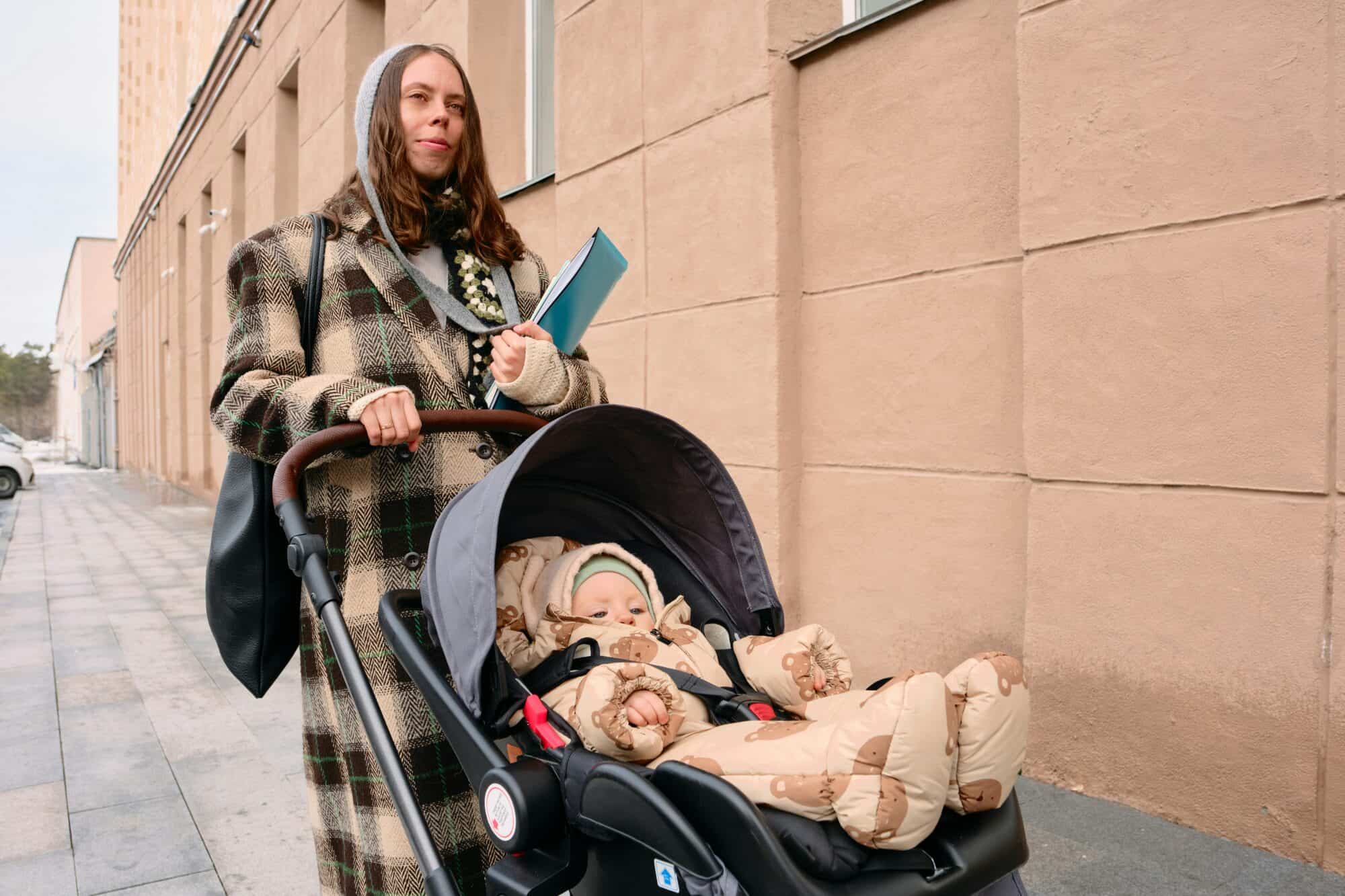
Winter Car Seat Safety: What Baby Should Wear
This is one of the most important winter baby safety tips.
Do not buckle your baby into a car seat while they are wearing a bulky coat or puffy snowsuit.
The American Academy of Pediatrics says bulky clothing, including winter coats and snowsuits, should not be worn under the car seat harness because the fluffy padding can flatten in a crash and leave extra space under the straps. NHTSA also warns that too much bulk can create extra room in the harness, which can put a child at risk in a crash. They recommend lightweight fleece layers instead of puffy materials, with a blanket or coat over the properly fitted harness for warmth.
What to do instead
Dress baby in:
- Long sleeve onesie
- Pants
- Socks
- Thin fleece jacket or sweater
- Hat and mittens if needed
Then:
- Buckle baby into the car seat.
- Tighten the harness so it is snug.
- Add a blanket over the straps.
- Remove the blanket once the car warms up if baby seems too warm.
Nothing bulky should go behind baby, under baby, or between baby and the harness.
A good car seat rule is: thin layers under the straps, warmth over the straps.
Can Baby Wear a Hat in Winter?
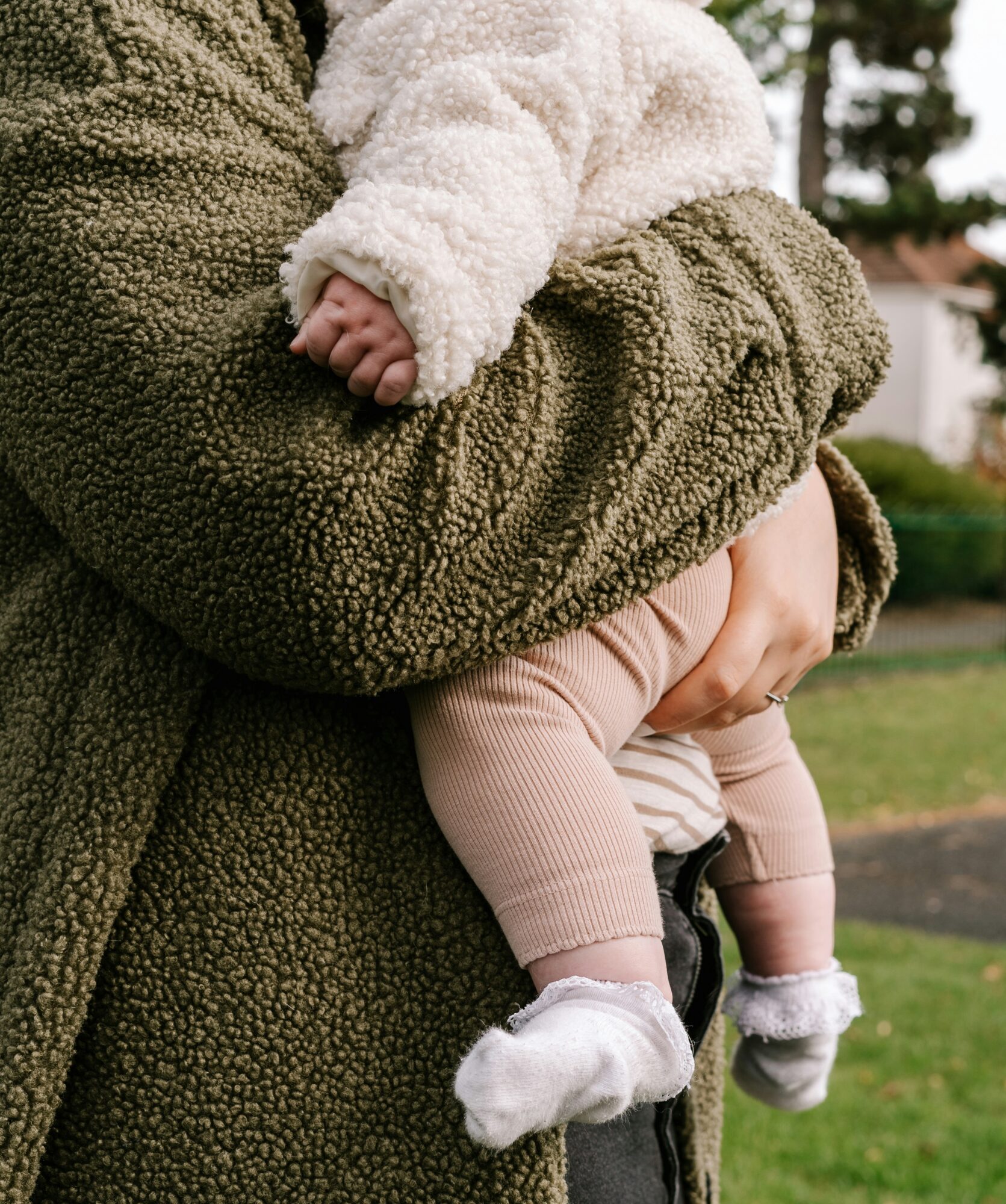
Outside, yes. A warm hat is a must in cold weather, especially one that covers the ears.
Inside, be careful. Babies do not usually need hats indoors, and hats should not be used for sleep unless your doctor gives specific instructions. The Lullaby Trust says babies do not need to wear hats indoors or sleep under a duvet or quilt because these can contribute to overheating.
Use a hat for:
- Outdoor walks
- Cold stroller rides
- Outdoor babywearing
- Very chilly transitions from house to car
Remove the hat when:
- Baby is sleeping indoors
- You enter a warm building
- The car warms up
- Baby’s neck or head feels sweaty
How to Dress Baby for Winter Sleep
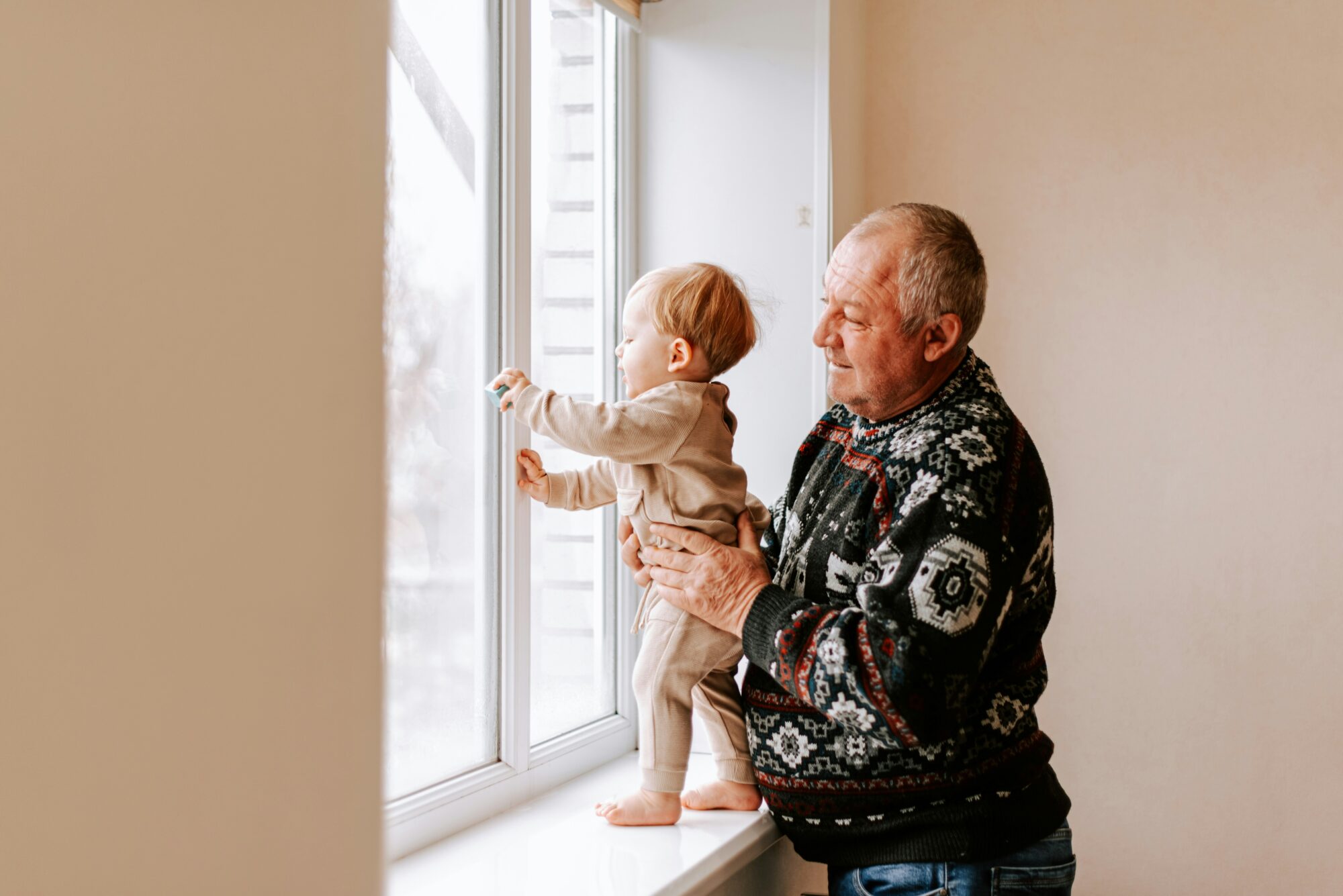
Winter sleep is where parents can get nervous because we want babies warm enough, but safe sleep matters so much.
For winter sleep, think cozy but not bundled.
Good winter sleep options:
- Footed pajamas
- Long sleeve sleeper
- Sleep sack
- Wearable blanket
- Lightweight layers if the room is cool
Avoid:
- Loose blankets
- Quilts
- Duvets
- Pillows
- Hats during sleep
- Overly heavy fleece layers in a warm room
- Sleeping next to heaters or radiators
The Lullaby Trust recommends keeping baby’s room around 16 to 20°C where possible and checking baby’s chest or back of the neck to see if they are too hot or cold. They also advise against hats indoors to help prevent overheating.
If your baby’s room is chilly, add a clothing layer or use the appropriate sleep sack tog for the room temperature. Do not pile loose blankets into the crib.
Related read: How to Help Your Baby Have Safer Sleep
What About Babywearing in Winter?
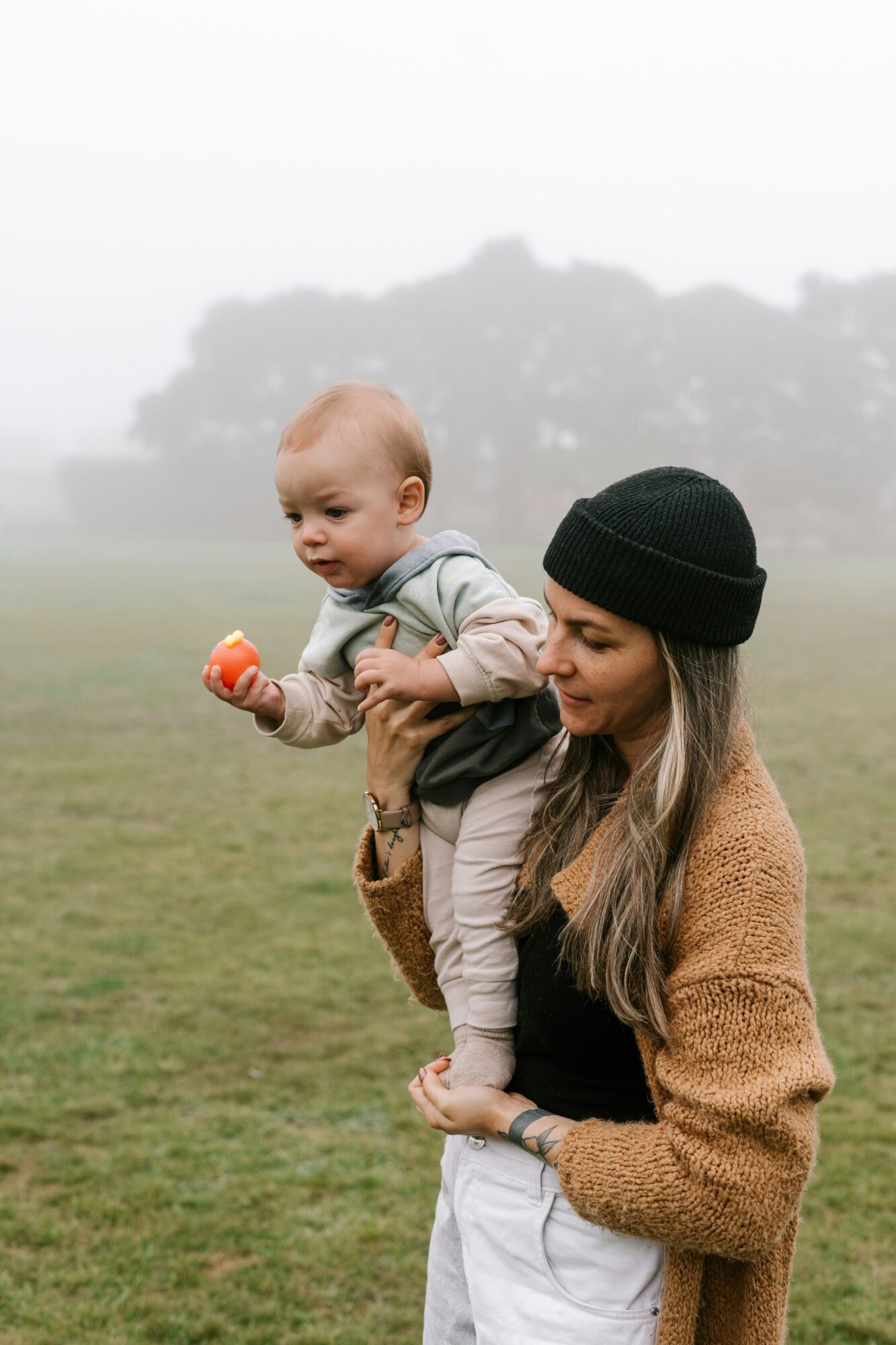
Babywearing can be cozy in winter because your body gives off heat.
But that also means baby can overheat if they are dressed like they are going into the Arctic and then tucked against your chest under a coat.
For winter babywearing, try:
- Normal indoor outfit
- Warm socks or booties
- Hat if baby’s head is outside your coat
- Carrier cover or oversized coat around both of you
- No bulky snowsuit inside a tight carrier
Always keep baby’s face visible and uncovered. You should be able to see their nose and mouth easily.
Check the back of baby’s neck often. If it feels sweaty, remove a layer.
The Biggest Baby Winter Dressing Mistakes
1. Dressing baby in one huge bulky outfit
Bulky does not always mean better. Thin layers are easier to adjust and often safer, especially near car seats.
2. Forgetting to remove layers indoors
This is so easy to do. You finally got the baby asleep, and now you are in a warm store. But babies can overheat quickly, so unzip the bunting, remove the blanket, or take off the hat.
3. Using cold hands as the only clue
Cold hands do not always mean baby is cold. Check the chest, tummy, back, or neck.
4. Buckling baby into a car seat with a puffy coat
Puffy coats and snowsuits can make the harness too loose. Use thin layers under the straps and blankets over the straps.
5. Putting baby to sleep in a hat
Hats are for outdoor cold, not everyday indoor sleep.
6. Using loose blankets in the crib
Use a sleep sack or wearable blanket instead.
Baby Winter Essentials Worth Having
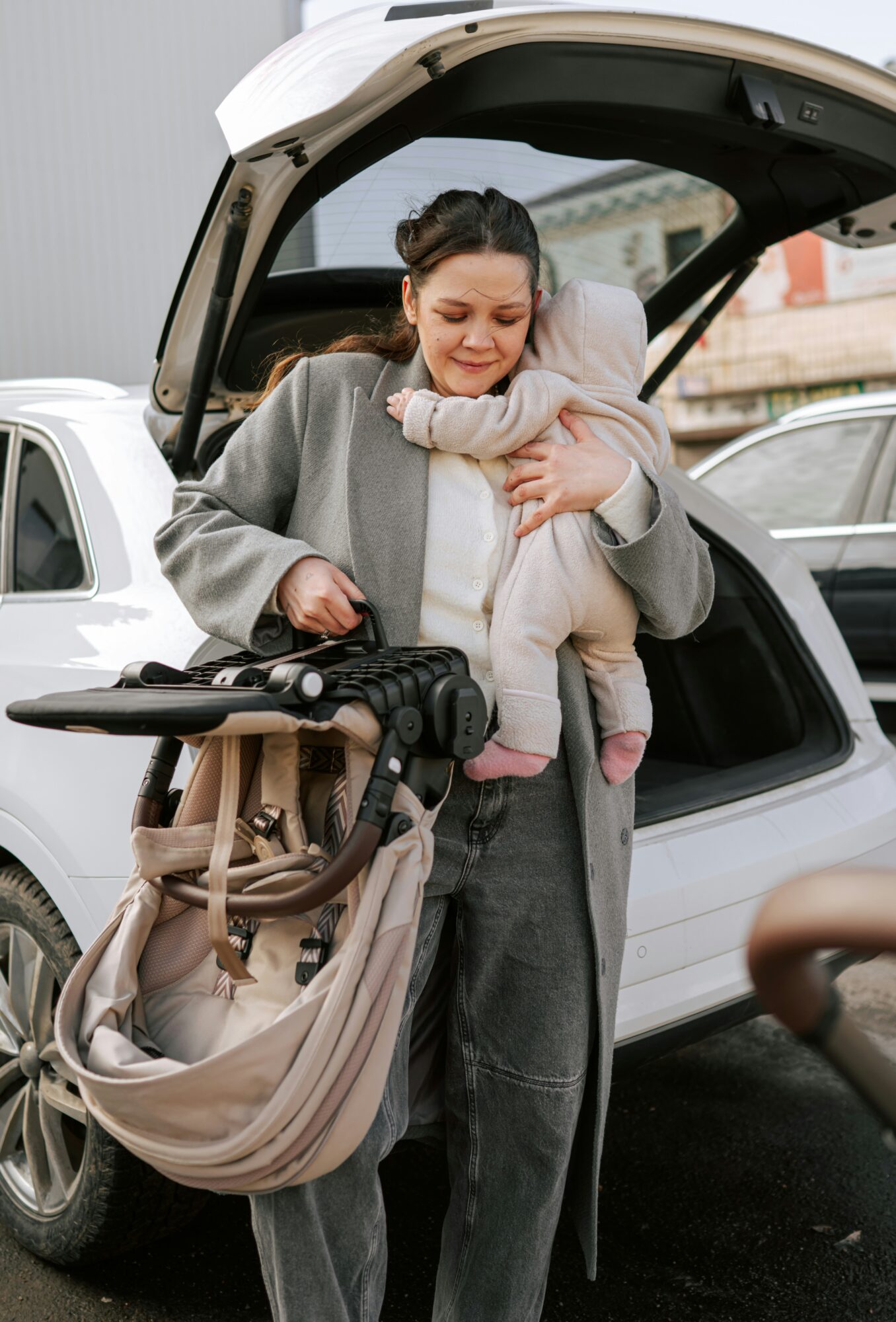
You do not need every adorable winter baby item on the internet. But a few practical pieces can make winter easier.
Helpful baby winter clothing items:
- Long sleeve bodysuits
- Footed sleepers
- Fleece pajamas
- Sleep sacks
- Thin fleece jacket
- Warm hat that covers ears
- Mittens
- Warm socks
- Soft booties
- Stroller blanket
- Bunting or snowsuit
- Car seat safe blanket
- Room thermometer
Budget tip: Babies outgrow winter gear fast. Check consignment shops, Facebook Marketplace, hand-me-downs, and local mom groups before buying everything new.
Related read: 21 Overlooked Baby Registry Items Every New Parent Needs
If money is tight, also check out: Free Baby Stuff for Low Income Moms
- Use light layers, not one bulky outfit.
- Check the back of baby’s neck, chest, or back, not just hands and feet.
- Remove a layer if baby is sweaty, flushed, or hot to the touch.
- Do not put bulky coats or snowsuits under car seat straps.
- Use a sleep sack instead of loose blankets for winter sleep.
- Remove hats indoors and during sleep unless your pediatrician says otherwise.
FAQ: How to Dress a Baby in Winter Without Overheating
How many layers should a baby wear in winter?
A good starting point is one more light layer than you are wearing. For cold outdoor weather, that may mean a base layer, a fleece layer, and a bunting or jacket. Always check baby’s neck, chest, or back and adjust.
How do I know if my baby is overheating?
Your baby may be overheating if their neck, chest, or back feels hot or sweaty. Other signs include flushed cheeks, damp hair, fussiness, heat rash, or fast breathing. Remove a layer and check again.
Are cold baby hands normal?
Yes, cool hands and feet can be normal for babies. Check the chest, tummy, back, or back of the neck instead.
Can babies wear snowsuits in car seats?
No, bulky snowsuits and puffy coats should not be worn under the car seat harness. Use thin layers, buckle baby snugly, then place a blanket over the straps.
What should baby wear to sleep in winter?
A footed sleeper and sleep sack is usually enough for many babies. If the room is chilly, add a light clothing layer instead of loose blankets. Avoid hats, quilts, pillows, and heavy loose bedding.
Should my baby wear a hat indoors?
Usually no. Hats are helpful outside in cold weather, but babies do not usually need hats indoors. They should not sleep in hats unless your pediatrician specifically tells you otherwise.
Is fleece too hot for babies?
Fleece can be great in winter, but it depends on the room temperature and how many layers baby is wearing. If baby’s neck or back feels sweaty, remove a layer.
What should baby wear outside in 40 degree weather?
For 40°F weather, try a long sleeve bodysuit, pants, socks, fleece layer, hat, and light jacket or bunting. Add a stroller blanket if baby is sitting still.
What should baby wear outside below freezing?
Below freezing, try a warm base layer, fleece or wool middle layer, insulated bunting or snowsuit, hat, mittens, warm socks or booties, and a stroller blanket if needed. Keep outings shorter and check baby often.
Final Thoughts
Dressing a baby in winter does not have to be perfect. It just has to be adjustable.
Start with light layers. Keep baby dry. Use a hat outside, but not for indoor sleep. Skip bulky coats in the car seat. Check baby’s neck, chest, or back instead of panicking over cold little fingers.
And remember, you can always adjust as you go.
If baby is sweaty, remove a layer.
If baby’s chest feels cool, add one.
If the weather changes, change the outfit.
If your baby keeps pulling off socks, welcome to the club.
Winter with a baby can feel intimidating at first, but once you get your layering system down, you will feel so much more confident getting out for walks, errands, snow days, and taking sweet little bundled-up baby pictures.


Leave a Reply