
Finding out you’re pregnant can feel exciting and nerve wracking at the same time.
One minute you’re staring at a positive pregnancy test, possibly crying, possibly shaking, possibly Googling “how am I going to fit a baby into my busy life?”

And then the symptoms start rolling in.
The nausea.
The exhaustion.
The food aversions.
The sudden urge to nap after doing one simple chore.
The emotional spiral where you’re excited, terrified, grateful, overwhelmed, alll at the same time.
Welcome to the first trimester, mama.
This first stretch of pregnancy can feel like a lot, especially when every checklist online makes it sound like you need to start planning your nursery, researching strollers, budgeting maternity leave, organizing your whole house, and becoming a glowing prenatal yoga queen by Tuesday.
But the truth is… the first trimester checklist does not need to be a full-time job.
For a lot of moms, the real first trimester goal is much simpler:
Survive. Eat something. Drink water. Call your doctor. Take the vitamin. Rest like it’s your new side hustle.

One mom in a pregnancy thread summed it up perfectly: “It’s all I can do to make it through the day at this point, I’m so exhausted. Checklist? Heck naw. More focused on not puking and bedtime.”
Honestly? Same.
I remember commuting over an hour during my second pregnancy and the whole goal was try not to puke on the way there. I was only successful 50% of the time.
This first trimester checklist is not meant to overwhelm you. It’s meant to help you figure out what actually matters, what can wait, and what is simply nice to do if you happen to get one of those good energy days where you feel like a human again.

This post contains affiliate links. I earn a commission from your purchases at no extra cost to you.
First, Take a Deep Breath
Before we get into the checklist, let’s just say this out loud:
You do not have to do everything right now.
The first trimester usually covers weeks 1 through 13 of pregnancy. A lot is happening in your body during this time, even if you don’t look pregnant yet. Your baby is growing quickly, major organs are beginning to form, and your hormones are throwing a full-blown office party without asking permission.
Nausea and vomiting affect an estimated 70–80% of pregnant women, according to a review published through the National Institutes of Health. So if you feel like you are spending your early pregnancy bargaining with crackers, ginger ale, and your own stomach, you are not being dramatic.
Fatigue is also extremely common. One study of pregnant women found that 94.2% experienced fatigue during pregnancy, with fatigue levels varying by trimester.
So when you feel like you need a nap after doing a simple task you aren’t lazy… it’s just pregnancy.
As one mom joked in a thread, her first trimester to-do list was: “Getting up each day and brushing my teeth without gagging.”
Give yourself some credit for getting through these small but challenging moments.

Your Bare Minimum First Trimester Checklist
These are some basics of what to do when you find out you’re pregnant.
1. Take a Pregnancy Test and Confirm Your Pregnancy
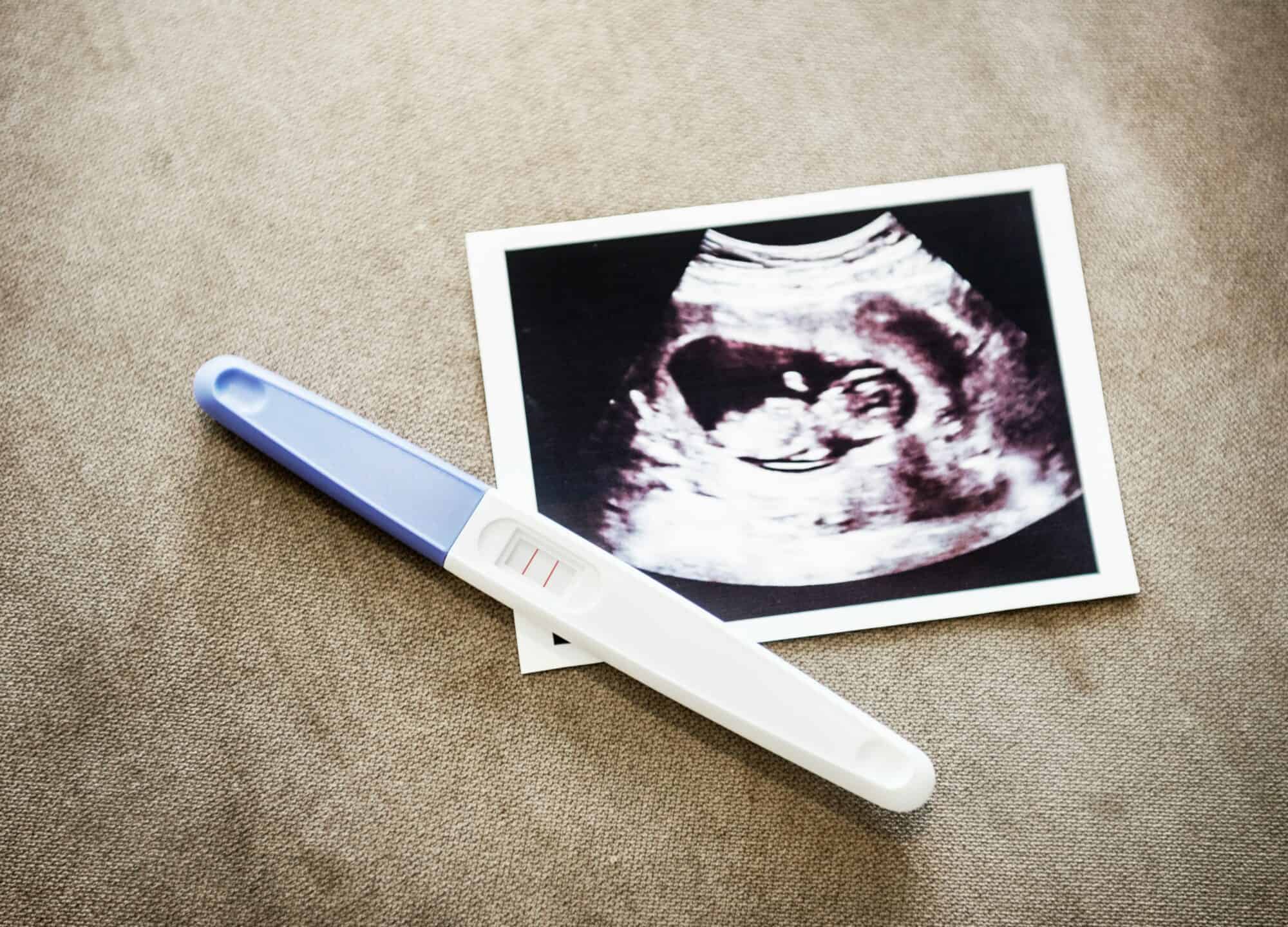
If you haven’t already, take a home pregnancy test. Some moms take one test and believe it. Others take seven and line them up.
Either way, once you get a positive result, you can call your doctor, OB-GYN, midwife, or prenatal care provider to ask what they recommend next.
Some offices may want to see you right away, while others schedule the first prenatal appointment around 8 to 12 weeks, depending on your history and their policies.
2. Start Taking a Prenatal Vitamin
One of the most important early pregnancy steps is starting a prenatal vitamin, especially one with folic acid.
The CDC recommends 400 micrograms of folic acid daily because it can help prevent serious birth defects of the brain and spine called neural tube defects. These defects can happen very early in pregnancy, sometimes before someone even knows they are pregnant.
I love Ritual prenatal vitamins because they are third party tested and backed by a human clinical trial.
If vitamins make your nausea worse, ask your provider what to do. Some moms do better taking them at night, with food, or switching to a different type.
This is not the season for suffering silently while your prenatal vitamin turns your stomach into a haunted carnival ride. Ask for options.
3. Call Your Doctor or Midwife
Put this one near the top of the list.
You don’t need to have every question figured out before you call. You can literally say, “I just got a positive pregnancy test and I’m not sure what to do next.”
They’ll usually help you schedule your first appointment and let you know what to expect.
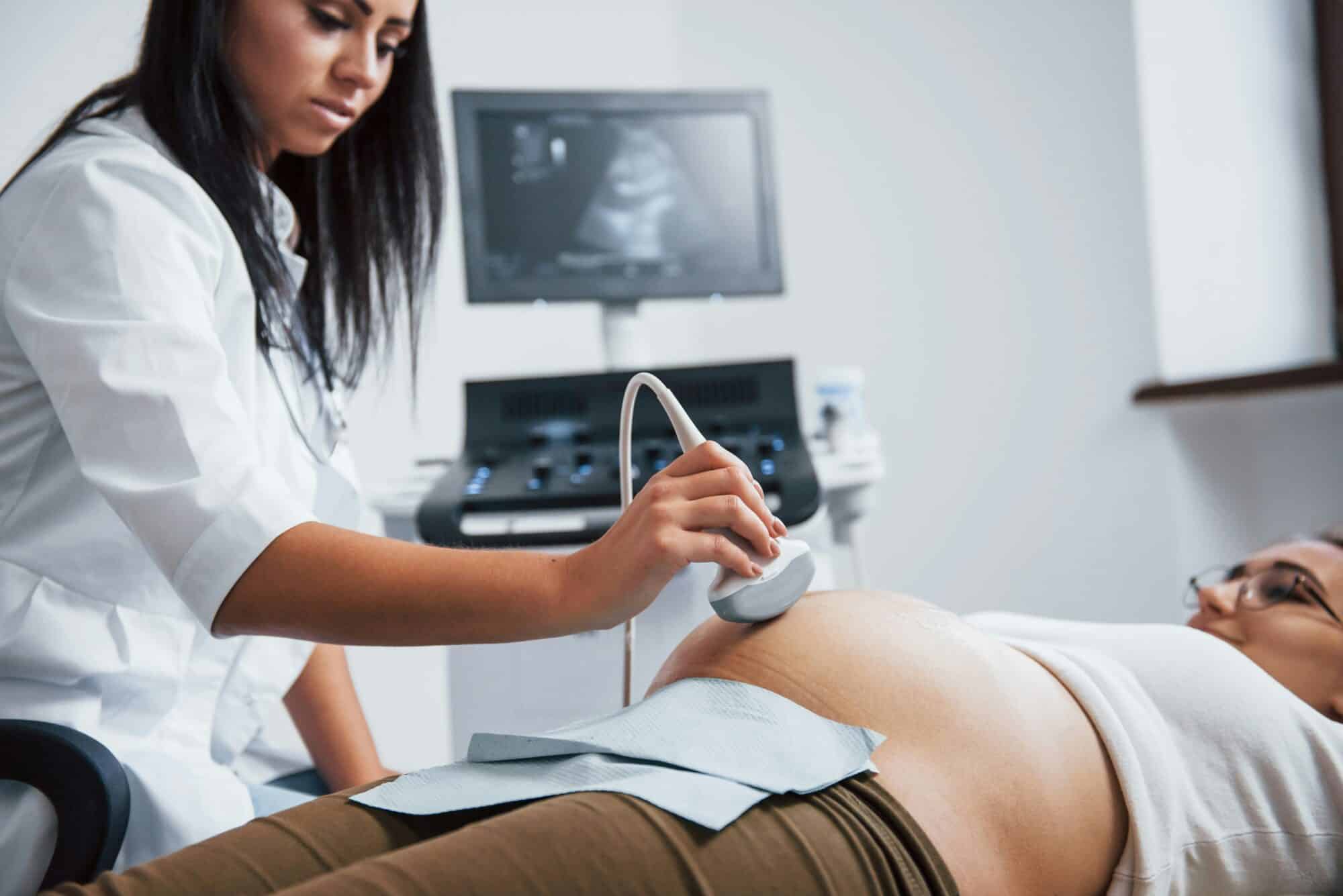
At your first prenatal visit, you may talk through your medical history, medications, symptoms, due date, prenatal testing options, and insurance or payment details.
You may also have lab work, urine testing, and possibly an ultrasound depending on how far along you are and how your provider does things.
4. Check Medications, Supplements, and Safety Basics
If you take any prescription medications, over-the-counter medicines, herbs, or supplements, check with your provider about what is safe during pregnancy.
Also ask about:
- Pain relievers
- Nausea options
- Allergy meds
- Sleep aids
- Mental health medications
- Skincare ingredients
- Exercise restrictions
- Food safety
Please don’t panic-Google every ingredient in your bathroom at midnight. Your doctor will know exactly how to handle your medications during your pregnancy.
Make a list of all your vitamins and supplements and ask your provider.

5. Stop Alcohol and Ask About Caffeine
Most pregnancy guidance recommends abstaining from alcohol during pregnancy.
For caffeine, many providers follow the common recommendation of limiting caffeine to about 200 mg per day, but it’s always smart to ask your own doctor or midwife what they recommend for you.
And yes, switching from “giant emotional support coffee” to “reasonable pregnancy coffee” can feel personal. We mourn. Then we adapt.
6. Eat What You Can and Stay Hydrated
In a perfect world, first trimester meals would be balanced, colorful, nourishing, and beautifully plated.
In the real world, sometimes dinner is toast, a string cheese, and three bites of cereal eaten dramatically on the couch.
Do your best.
Small, frequent meals can help some moms with nausea. Bland foods, cold foods, smoothies, fruit, crackers, protein snacks, popsicles, soups, and lemon water are all common first trimester survival tools.
Here’s a list of pregnancy snacks good for nausea!
If you cannot keep fluids down, are vomiting repeatedly, feel dizzy, or notice signs of dehydration, call your healthcare provider.
ACOG notes that nausea and vomiting are common in pregnancy, but severe symptoms can become hyperemesis gravidarum and may need medical care.

7. Rest Like It Is Productive Because It Is
First trimester exhaustion is no joke.
This is not normal “I stayed up too late scrolling” tired. This is “my body is creating a human life and I need to lie down immediately” tired.
One mom in a Reddit thread kept her first trimester must-do’s beautifully simple: “Um… Take naps?”
Perfect advice!
If you can, go to bed earlier, nap when possible, lower your expectations for housework, and let some nonessential things slide.
Your body is doing a lot behind the scenes. Just because no one can see it yet doesn’t mean it isn’t real.

8. Look Over Your Health Insurance
This is not the fun part of pregnancy, but it matters.
Check your insurance coverage for:
- Prenatal visits
- Ultrasounds
- Lab work
- Genetic testing
- Hospital delivery
- Midwife or OB care
- Anesthesia
- Breast pumps (see if your insurance covers a FREE breastpump)
- High-risk pregnancy care if needed
You may also want to ask your provider’s office if they can estimate prenatal care costs or explain how billing works.
Here is some advice to save money on pregnancy and postpartum care.
9. Start a Simple Pregnancy Budget
You do not need to buy all the baby gear right now. In fact, please do not panic-buy a wipe warmer at 7 weeks because TikTok told you it was life-changing.
Start with a simple baby budget instead.
Think about:
- Prenatal care costs
- Delivery costs
- Maternity leave income changes
- Baby gear
- Diapers and wipes
- Formula or breastfeeding supplies
- Childcare
- Maternity clothes
- Freezer meals or grocery help
- Emergency savings
One mom shared that she was already “working on financial planning because things will be tight with a third child, but I know we can do it.”
That is such a real mom mindset. Not pretending money grows on a magical nursery tree. Just making a plan and trusting that one step at a time still counts.

10. Make a Tiny Daily Survival List
If you are already overwhelmed, one of the best things you can do is make a tiny “must happen” list.
Not a crazy… get ALL the things done kinda list.
A bare minimum household survival list.
For example:
- Feed everyone
- Drink water
- Take prenatal
- Clear obvious floor hazards
- Care for pets
- Start one load of laundry if possible
- Rest
One mom said she made a basic list of things that “HAVE to get done each day,” like keeping the floor clear, feeding everyone, and taking care of pets so she and her husband could split tasks when pregnancy got hard.
That is genius because the first trimester can make your normal routines fall apart fast. Having a simple list helps your partner or family know what actually matters when you’re too tired or sick to explain it for the 19th time.

11. Decide Who You Want to Tell and When
You can tell people right away.
You can wait until after your first appointment.
You can wait until the second trimester.
You can tell your partner, your mom, your best friend, and the lady at Target because you’re too excited to function.
There is no one right way.
Some parents want support early. Others want privacy. Some have a history of loss and need to navigate those emotions carefully. Some simply cannot keep a secret because their nausea is giving them away like a very rude little informant.
Do what feels right for your family.
12. Start a Notes App Pregnancy Brain Dump
You do not need a fancy pregnancy journal unless you want one.
A notes app works beautifully.
Keep track of:
- Symptoms
- Questions for your provider
- Foods you can tolerate
- Foods that betrayed you
- Appointment dates
- Baby name ideas
- Registry ideas
- Random worries
- Sweet moments you want to remember
Pregnancy brain plus first trimester fatigue is a bold combination. Write things down.
Your future self will thank you.

The “If You Have Energy” First Trimester Checklist
This is the bonus list of things to do if you have extra time and energy.
If you feel okay, these tasks can help set you up for later. If you feel awful, save them for the second trimester when many moms get a little energy back.
13. Do a Gentle Declutter
You do not need to reorganize your entire house.
But if you get a random burst of energy, decluttering small areas can help.
Try:
- One drawer
- One bathroom cabinet
- One closet shelf
- One kitchen cabinet
- One basket of random baby or kid items
One mom shared that she wanted to go through drawers and cabinets because she remembered how many unexpected things came with a baby and wanted free space before the new items arrived.
That is smart. Babies are tiny, but they tend to need a lot of stuff.
14. Think About What Baby Gear You Actually Need
If this is your first baby, you may want to start researching the big things slowly:
- Car seat
- Stroller
- Safe sleep space
- Diaper changing setup
- Baby carrier
- Feeding supplies
- Baby monitor
- Diapers and wipes
If this isn’t your first baby, take inventory of what you already have.
One mom said that for her third baby, she planned to borrow practical items from friends, like a play mat, swing, and breastfeeding pillow, because she had given away a lot of baby gear.
Borrowing is underrated. Babies use some things for approximately seven minutes before moving on with their tiny expensive lives.

15. Start a Baby Registry Slowly… and sign up for freebies
You can start a baby registry in the first trimester if it feels fun and helpful.
This does not mean you need to finish it.
A lot of baby registries offer free baby stuff. So if you sign up early you will have those before baby arrives.
Think of it more like a parking lot for ideas. When someone recommends a baby product, add it. When you remember something you loved with a previous baby, add it. When you’re awake at 3 a.m. wondering how many burp cloths a human can possibly need, add a note and go back to sleep.
A registry can also help you organize your thoughts before people start asking what you need.
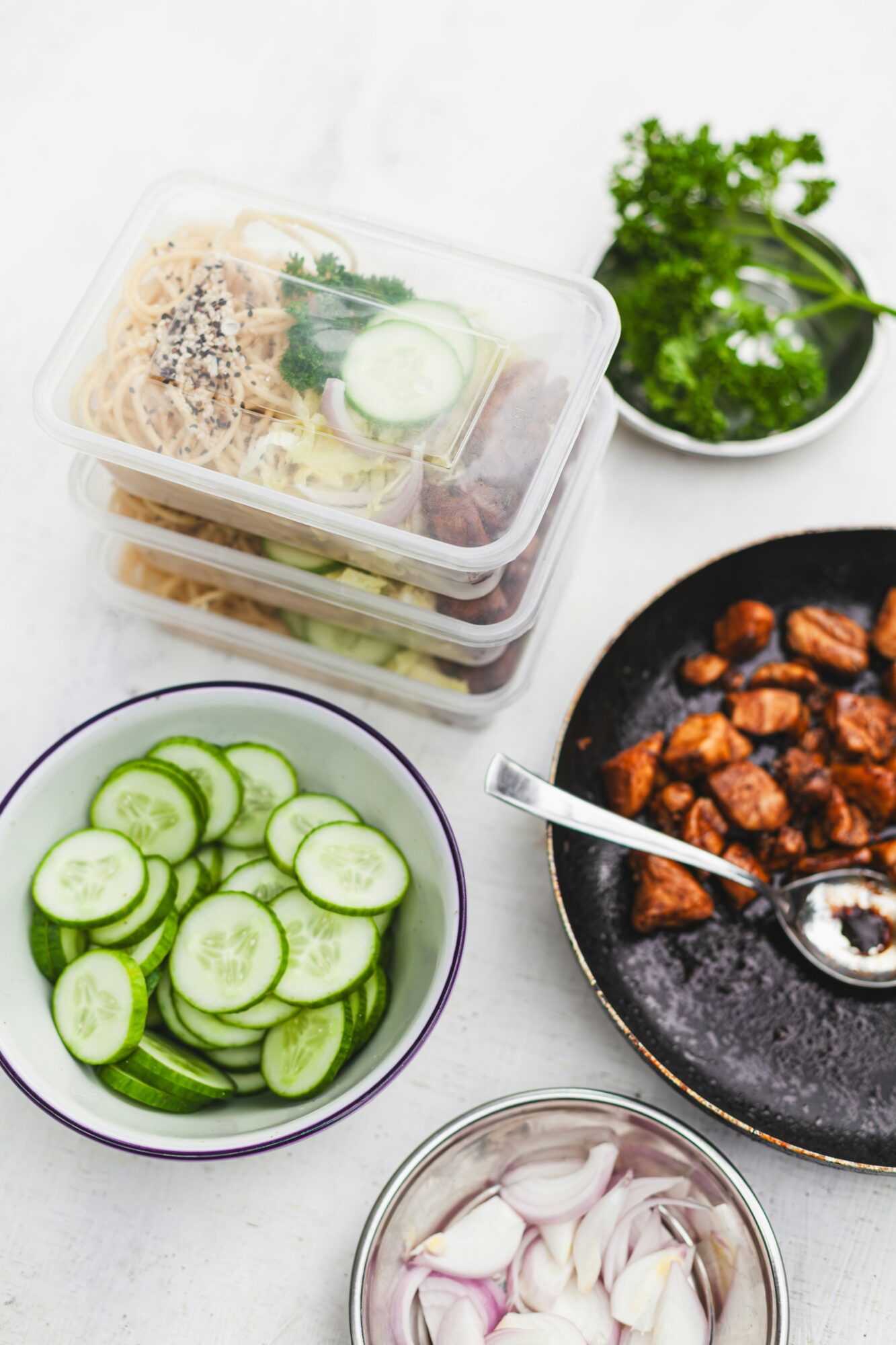
16. Research Freezer Meals for Later
You do not need to cook freezer meals in your first trimester unless you are feeling amazing, in which case please tell us your secrets.
But you can start saving ideas.
If you can afford a meal service like Hello Fresh or Home Chef they are LIFE SAVERS!
One mom said her first baby came a month early, so she didn’t get to make freezer meals ahead of time. This time, she wanted to research meals early and start cooking later.
That’s a great approach.
You can save:
- Crockpot freezer meals
- Soups
- Casseroles
- Breakfast burritos
- Muffins
- Pasta bakes
- Dump-and-go Instant Pot meals
Another mom said that when her sister had her second baby, they threw her a sprinkle and asked everyone to bring a freezer meal instead of a baby gift.
That is honestly brilliant. Sometimes new parents need stockpiled dinners more than extra baby gear.
17. Build Kid Independence If You Already Have Children
If this isn’t your first baby, the first trimester can be a good time to think about what would make life easier later.
Depending on your child’s age, you might work on:
- Walking while holding your hand
- Getting dressed independently
- Potty training if they’re ready
- Cleaning up toys
- Staying in their room at bedtime
- Simple snack independence
- Gentle baby routines
One mom shared that she wanted to help her toddler get better at walking while holding hands because she wanted to minimize lifting later in pregnancy.
That kind of small skill can be a big deal when you’re pregnant, tired, and can’t always carry everything.
18. Move Your Body Gently If You’re Cleared
Exercise in pregnancy does not have to mean a full prenatal workout program with matching leggings and a water bottle the size of a toddler.
It can be a walk.
ACOG says that, for many pregnant patients, an exercise program can work toward moderate-intensity activity for at least 20–30 minutes per day on most or all days of the week, as long as there are no medical reasons to avoid it.
If you like structured workouts Apple Fitness has awesome prenatal workouts available.
But please hear this part: if you are nauseous, exhausted, dizzy, high-risk, in pain, or your provider has given you restrictions, ask first and go gently.
A five-minute walk counts. Stretching counts. Sometimes just existing in bed counts.

What Can Wait Until the Second Trimester?
A lot.
Seriously.
If you are feeling awful, these things can usually wait:
- Nursery decorating
- Buying most baby gear
- Finishing your registry
- Taking childbirth classes
- Buying a full maternity wardrobe
- Deep cleaning the house
- Planning maternity photos
- Washing baby clothes
- Packing hospital bags
- Making freezer meals
- Finalizing baby names
One mom gave solid advice in a forum: “Nothing! Just relax and take care of yourself right now. You have time and will feel so much better in the second trimester.”
That is the energy we are keeping.
The second trimester is often when moms feel more like themselves again. Not always, but often. So if your first trimester is mostly crackers, naps, and survival mode, you are not behind.
First Trimester Red Flags to Call Your Provider About
This article is not medical advice, so always follow your own provider’s instructions. But in general, don’t hesitate to call if something feels wrong.
Call your doctor or midwife if you have:
- Heavy bleeding
- Severe cramping or one-sided pain
- Fever
- Severe vomiting or inability to keep fluids down
- Signs of dehydration
- Fainting or dizziness
- Painful urination
- Severe headache
- Sudden swelling
- Thoughts of harming yourself
- Severe anxiety or depression
- Anything that feels scary or unusual to you
You are not bothering them. That is what they are there for.
And if your gut says, “This doesn’t feel right.” It’s best to listen to you’re instinct.
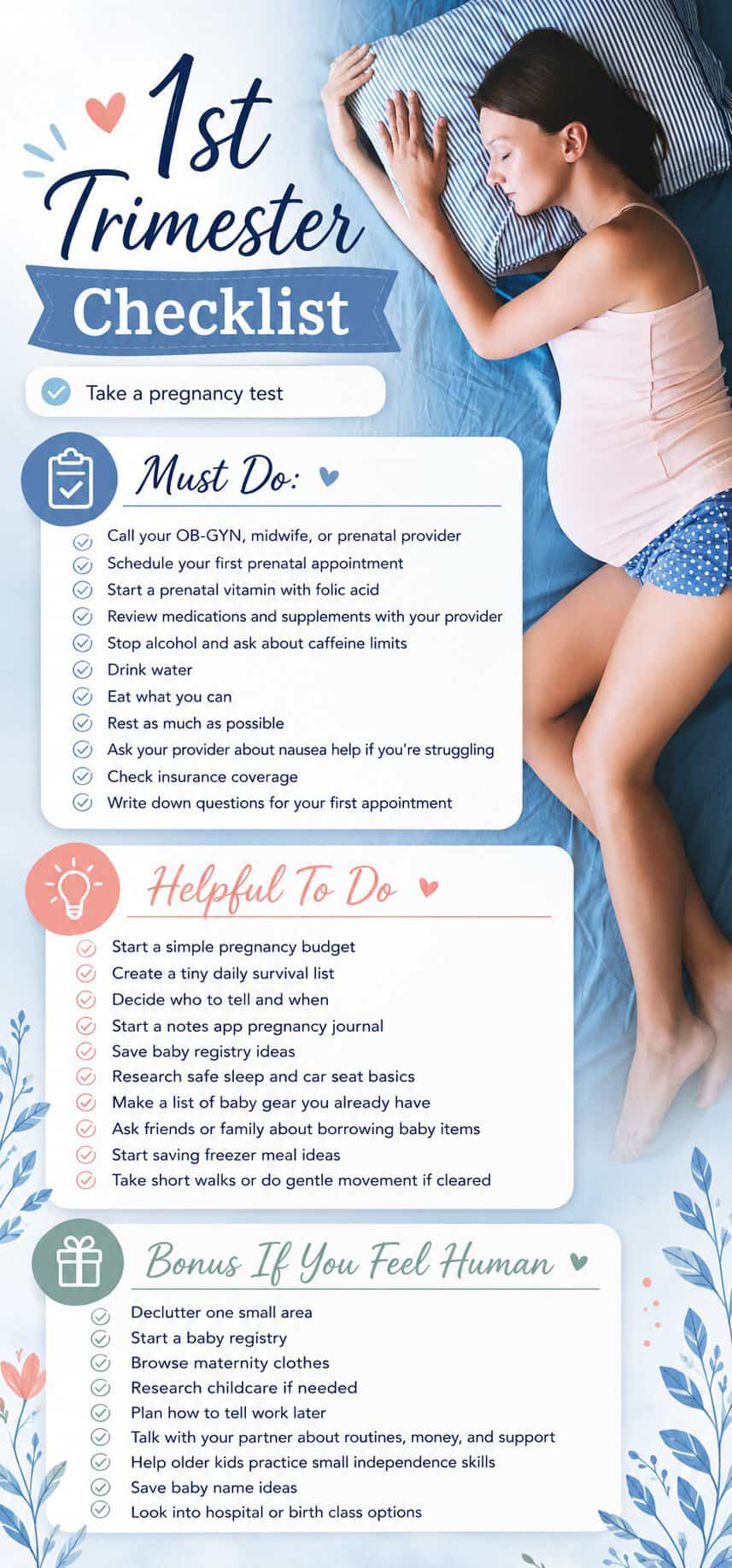
The Overwhelmed Mom’s First Trimester Checklist
Here’s the simple version you can screenshot, print, or copy into your notes app.
Must Do
- Take a pregnancy test
- Call your OB-GYN, midwife, or prenatal provider
- Schedule your first prenatal appointment
- Start a prenatal vitamin with folic acid
- Review medications and supplements with your provider
- Stop alcohol and ask about caffeine limits
- Drink water
- Eat what you can
- Rest as much as possible
- Ask your provider about nausea help if you’re struggling
- Check insurance coverage
- Write down questions for your first appointment
Helpful To Do
- Start a simple pregnancy budget
- Create a tiny daily survival list
- Decide who to tell and when
- Start a notes app pregnancy journal
- Save baby registry ideas
- Research safe sleep and car seat basics
- Make a list of baby gear you already have
- Ask friends or family about borrowing baby items
- Start saving freezer meal ideas
- Take short walks or do gentle movement if cleared
Bonus If You Feel Human
- Declutter one small area
- Start a baby registry
- Browse maternity clothes
- Research childcare if needed
- Plan how to tell work later
- Talk with your partner about routines, money, and support
- Help older kids practice small independence skills
- Save baby name ideas
- Look into hospital or birth class options
Final Thoughts on the First Trimester
The first trimester can be beautiful, emotional, weird, exhausting, and honestly kind of humbling.
You may feel like you should be doing more, planning more, glowing more, enjoying more.
But if you are tired, nauseous, anxious, or overwhelmed already, you are not failing pregnancy.
You are in it.
The most important things right now are taking care of your body, getting connected with prenatal care, taking your prenatal vitamin, staying hydrated, eating what you can, and resting without guilt.
Everything else can be done slowly.
One tiny step at a time.
And if your checklist today is “take vitamin, eat toast, and survive until bedtime,” that is still a checklist, mama.


Leave a Reply